
Mid-sized 12.1” display ready to rumble
Extending the 12.1” display size offering, Avnet Displays adds another bright addition to the SimplePlus Touch Display family — combining trusted performance with an even broader choice for our customers.
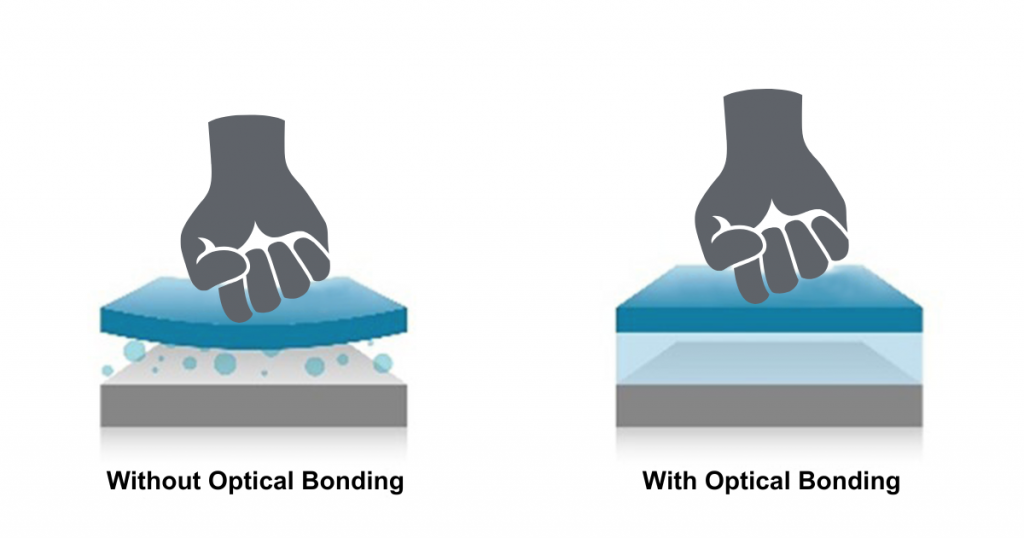
Today, touch displays are a familiar sight in industrial applications, so making sure that they are robust and durable, while also maintaining their brilliance, is essential. This means that we pay particular attention to how each component of the display is connected – a process called ‘optical bonding’.
There are three kinds of transparent optical bonding used to connect the display, touch sensor and cover glass:
Learning LOCA
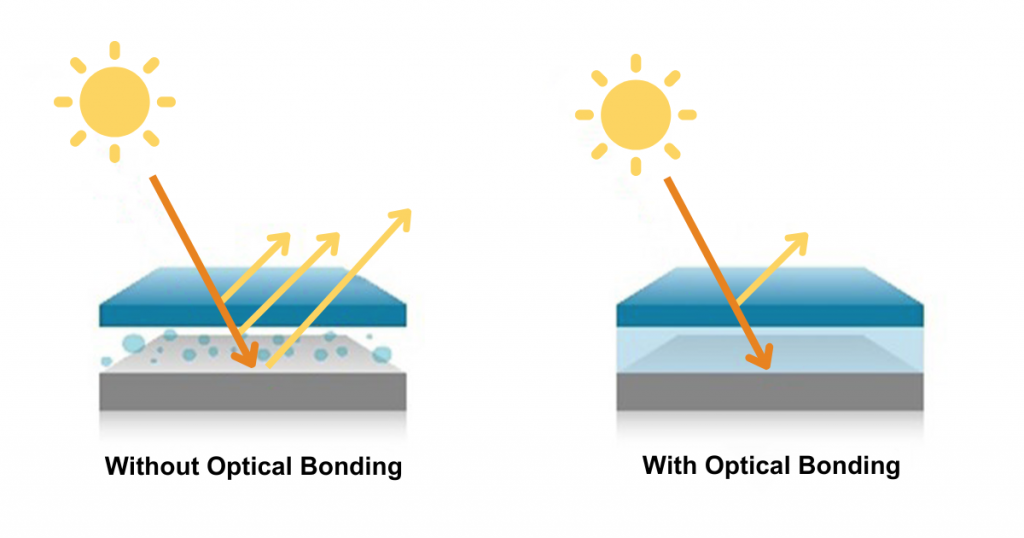
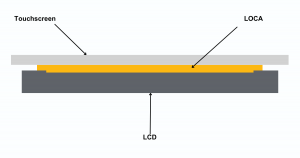
With this technique, the air gap between the display and touch sensor/cover glass is completely sealed using liquid adhesive. This is achieved using a dosing system which precision dispenses the adhesive according to the geometry of the display. With this technique, the touch sensor or cover glass can be applied without a single bubble. No bubbles equal no annoying reflections (because there are none between each surface), and at the same time the color brilliance and contrast are increased.

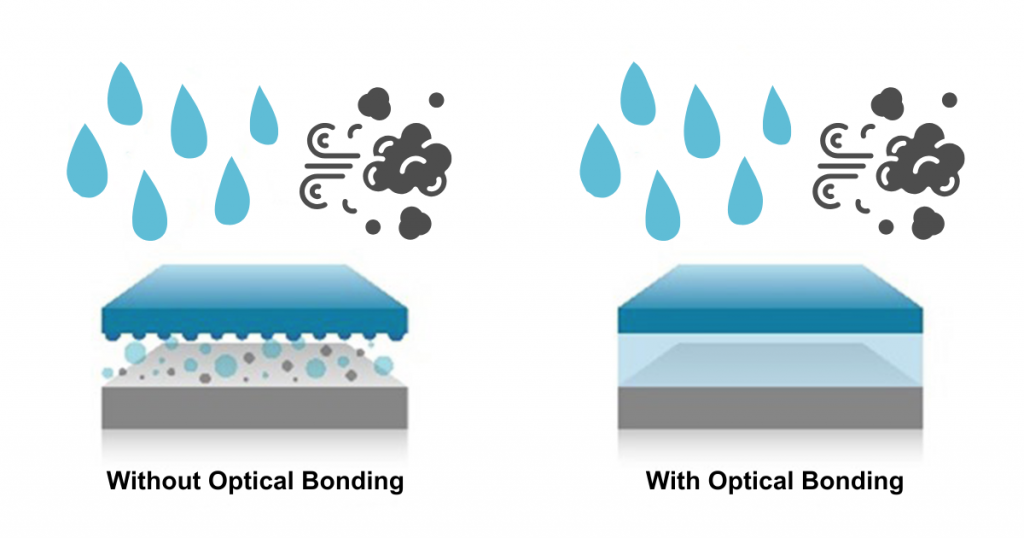
But, for industrial or outdoor applications, the layer of LOCA also intensifies impact resistance and prevents particles or moisture coming into contact with any components, which could cause permanent damage or, at the very least, compromise the image quality.
OCA, on the other hand, seals the air gap with adhesive film, which is, once again, applied with precision and then bonded to the touch sensor or cover glass. It’s a swifter process, as there is no wait for the adhesive to cure, and there is little to no thermal stress to the components. This technique too has the benefit of creating a robust, impact resistant display. Both LOCA and OCA also significantly minimize splintering of the display if it meets with a destructive force.
However, there are some less positive aspects of LOCA to consider. During the curing process, it’s possible that some areas are outside of the reach of the UV, and this can lead to air bubbles – sometimes even delamination. Because of the nature of the bonding, as soon as any contaminants or bubbles appear, the entire screen has to be replaced. For an already complex and costly process, this can be very problematic.

Extending the 12.1” display size offering, Avnet Displays adds another bright addition to the SimplePlus Touch Display family — combining trusted performance with an even broader choice for our customers.

Technologies tend to come full circle, but in this case we mean literally – combining an advanced rotary encoder (and encoder shell) with a 1.28-inch circular TFT display for a single, compact control solution. Users can navigate with precision by simply turning or pressing the knob, while the integrated screen displays menus, status updates or graphics right at the point of interaction.
Air Gap Bonding
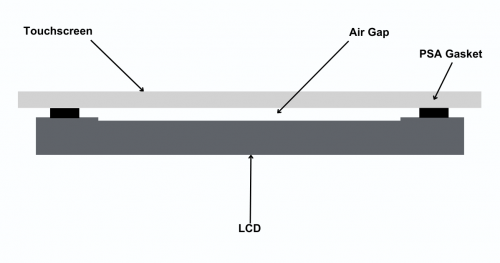
Here, we use a high-performance double-sided adhesive tape frame, which connects the display and touch unit with an air gap remaining between them, hence the name. This type of bonding is probably the easiest and simplest way to connect a display unit, which reflects in the cost. It’s a particularly strong and stable bonding technique, overall, as well as being highly versatile. It can be used to bond low-energy surfaces (such as PE and PP) or many other plastics and powder coatings.
Unlike LOCA/OCA bonding, it doesn’t have the advantages of increased readability, minimization of reflection and protection against dust and dirt particles. It also creates a comparatively thick structure, but this can be adjusted by selecting different tape sizes. There can also be issues around reduced adhesion due to an uneven surface in the cover glass. Plus, the introduction of any dirt or grease can cause components to detach.
Ultimately, it’s important to understand that there is no hierarchy when it comes to bonding – no technique is ‘better’ or ‘worse’ than the other. They simply have different qualities which are context appropriate. So, it’s always a good idea to understand the pros and cons of each process to ensure that you’re selecting the best option for your display.
|
|
Alexander Sommerfeld - Solution Manager Display Integration, Avnet Displays After getting his diploma in mechatronics, Alexander entered the world of display solutions at MSC in 2006 as a designer for display housings. After a short time, he also took over as team coach for new product manufacturing of open frame display solutions. From 2010, he continued to work as a project developer in the display sector and supported sales and customers with design and integration. In 2013, Alexander took over the planning and completion of the clean rooms and the new display production line. After completion and relocation in 2015, he dedicated himself to the new task of optical bonding processes and specialized in this area. In his current role as Solution Manager Display Integration, Alexander supports the Avnet team and their customers concerning the integration of display products into customer applications and steers and extends the product lines of SimplePlus and MipiPlus display solutions. Read More |
Of course, our Avnet Displays experts are on hand to guide you in your choice of bonding and the creation of your display or touch solutions. Find out how Avnet Displays can propel your product innovation and get in touch today.
Let us know about your product or your challenge and our team will get in touch to discuss how we can help.
Your privacy is important to us.
We use cookies to enhance your experience when visiting our websites: performance cookies show us how you use this website, functional cookies remember your preferences and targeting cookies help us to share content relevant to you. Select "Accept all" for giving your consent to all cookies, select "Cookie settings" for managing the different cookies or select "Reject all" for using only strictly necessary cookies. You can change your cookie settings at any time by clicking on the cookie settings link on the website.