Performance under pressure: our new resistive keys are a touch different
In the industrial world, the capacitive touchscreen can be a sensitive soul. It performs beautifully under ideal conditions, but this is a luxury most industries can’t afford.
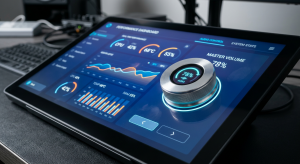
When you want people to interact differently with your touchscreen, what do you do? For example, you might want to bring the benefits of a product to life using an interactive table, where different aspects of the user experience are displayed as you move it around the surface. Or perhaps you have a touch display that would be more user friendly with a ‘dial’ function? Not easy to achieve with just fingers. How do you bring the physical and digital together in an easy and fun way?
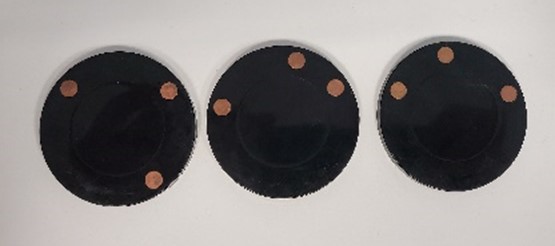
Examples of plastic tags with 3 conductive elements
Our SimplePlus capacitive touch screens can now offer a new object recognition system which brings such ideas to life. Where you might normally just use human touch, we can offer conductive tags, which fit under the object you wish to move around the screen.
These serve as an electrical conductor to stimulate the electrostatic field of the touch screen. Your chosen object is recognized when its tags interfere with the electric field that is projected above the surface of the touch screen. This change in capacitance is detected by the controller which interprets the X and Y coordinates of the event.
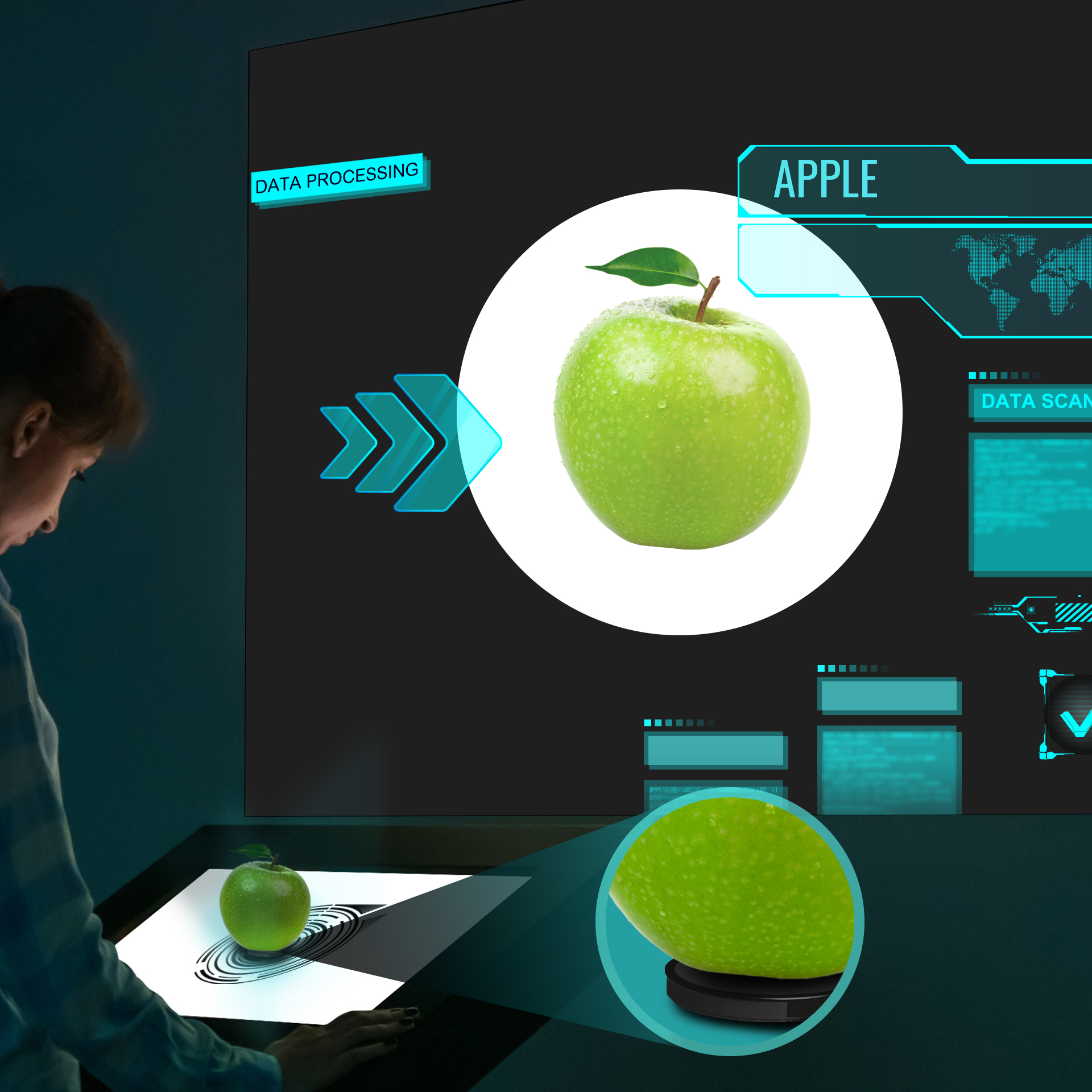
In the second image, you can see how products might look when tagged and on a touch surface. When the tags sit on the touch, the connected PC recognizes in real-time the position of the conductive elements on each tag and displays the appropriate information to each individual object.
It’s an extremely cost-effective solution, with excellent display image quality that remains so under all light conditions due to a clear and transparent touch sensor. The tags require no battery or power source, and the surface remains sensitive to both the object and touch detection.
We would typically expect to see such object recognition tables in museums, retail stores, educational settings, for entertainment purposes, at trade shows and on counters and bars. But, of course, our customers are endlessly innovative and we’ll no doubt be seeing these in plenty of exciting and unexpected places!

In the industrial world, the capacitive touchscreen can be a sensitive soul. It performs beautifully under ideal conditions, but this is a luxury most industries can’t afford.

There’s a word we really like here at Avnet Displays: simplification. Our engineers ask themselves, “how can we make this easier for our customers and their end-users?” and “what will it take to make using this display as simple as possible?”
|
|
Stefano Rosato - Director, Technical Touch Technology at Avnet Stefano Rosato is director of technical touch technology in the Display Solutions team at Avnet. Stefano helps customers solve touch challenges and supports customers through the whole design-in phase for touchscreen integration. With deep knowledge about PCAP technology, along with its design-in rules, tuning and pattern designs, Stefano is a leading expert in the touchscreen industry.Read More |
Our Avnet Displays come in a range of form-factors and our display-experts are on hand to guide you in the creation of display or touch solutions that meet your requirements. Find out how Avnet Displays can propel your product innovation and get in touch today.
Let us know about your product or your challenge and our team will get in touch to discuss how we can help.
Your privacy is important to us.
We use cookies to enhance your experience when visiting our websites: performance cookies show us how you use this website, functional cookies remember your preferences and targeting cookies help us to share content relevant to you. Select "Accept all" for giving your consent to all cookies, select "Cookie settings" for managing the different cookies or select "Reject all" for using only strictly necessary cookies. You can change your cookie settings at any time by clicking on the cookie settings link on the website.