
Performance under pressure: our new resistive keys are a touch different
In the industrial world, the capacitive touchscreen can be a sensitive soul. It performs beautifully under ideal conditions, but this is a luxury most industries can’t afford.
When it comes to the world of sensor technology, we like to think that we know our stuff. And while the principles that are central to pressure sensors have been around for some time, we’re certainly seeing a new interest in the latest advancements in the field.
It makes sense, as the latest in Advanced Pressure Sensors have a number of advantages over the traditional PCAP (Projected Capacitive) technology and our customers are always keen to explore ways to make their products and projects more effective, flexible and with a reduced development time. Industrial sectors, of course, have some very specific challenges to address, so we are frequently tasked with finding solutions that will not degrade over time and perform under the most extreme conditions. So, here are the top five reasons we recommend they make the switch to APS:
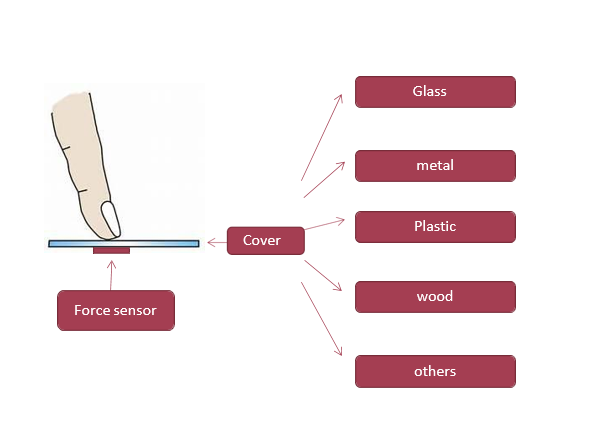
PCAP technology is primarily limited to glass or acrylic materials, but the new breed of pressure sensors can be integrated into a world of interesting materials – think metal, wood, plastic, and even stones. It’s a level of flexibility that our customers love and it allows for broader application across industries, more design freedom and an enhanced user experience.
APS boasts an impressive lifespan and remains durable even beyond ten million uses. This is significantly higher than the typical 500,000 uses seen in mechanical and capacitive sensors. Better still, their robust anti-interference capabilities mean even greater reliability in diverse environments.
These sensors perform superbly in the most challenging environments. They are waterproof, dustproof and oil-resistant, making them perfect for applications requiring durability and resistance in the kind of conditions where PCAP sensors may struggle. They are also ready for IPXX certification, ensuring reliability in harsh conditions.
The new pressure sensors eliminate the need for holes or additional holders for mounting, which, of course, simplifies the assembly process. But it also maintains the integrity of the surface material, which results in a sleek design-led finish.
Advanced Pressure Sensors are specifically designed to detect even the slightest deformation under pressure, which means they are high on sensitivity and precision. So, when you need exact measurements and subtle touch detection, they are the clear choice over PCAP sensors, which rely on changes in capacitance through direct touch or a stylus.

In the industrial world, the capacitive touchscreen can be a sensitive soul. It performs beautifully under ideal conditions, but this is a luxury most industries can’t afford.

There’s a word we really like here at Avnet Displays: simplification. Our engineers ask themselves, “how can we make this easier for our customers and their end-users?” and “what will it take to make using this display as simple as possible?”
|
|
Stefano Rosato - Director, Technical Touch Technology at Avnet Stefano Rosato is director of technical touch technology in the Display Solutions team at Avnet. Stefano helps customers solve touch challenges and supports customers through the whole design-in phase for touchscreen integration. With deep knowledge about PCAP technology, along with its design-in rules, tuning and pattern designs, Stefano is a leading expert in the touchscreen industry.Read More |
Our Avnet Displays come in a range of form-factors and our display-experts are on hand to guide you in the creation of display or touch solutions that meet your requirements. Find out how Avnet Displays can propel your product innovation and get in touch today.
Let us know about your product or your challenge and our team will get in touch to discuss how we can help.
Your privacy is important to us.
We use cookies to enhance your experience when visiting our websites: performance cookies show us how you use this website, functional cookies remember your preferences and targeting cookies help us to share content relevant to you. Select "Accept all" for giving your consent to all cookies, select "Cookie settings" for managing the different cookies or select "Reject all" for using only strictly necessary cookies. You can change your cookie settings at any time by clicking on the cookie settings link on the website.