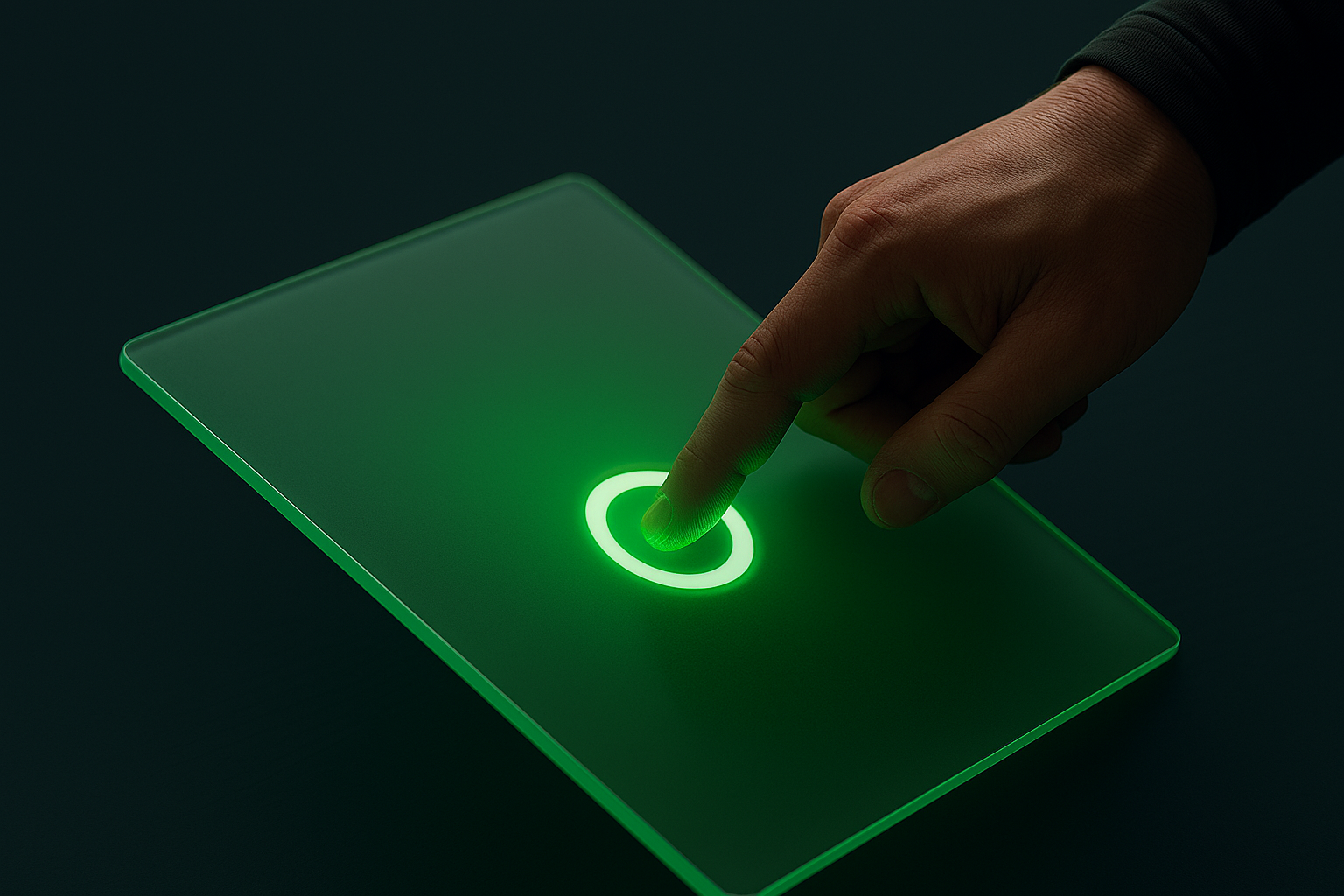
Where capacitive technology reacts to proximity or moisture, our ‘force-sensing’ solution works with pressure. High-sensitivity sensors sit behind your surface of choice and can detect even the slightest changes when this material is pressed – precise enough to recognize a very light touch (around 100g), even through 0.8mm stainless steel.
In our experience, users notice immediately and it makes a tangible – and very welcome – difference to the way they use the screen:
- No fingers required. Capacitive screens can be frustrating when you’re wearing gloves or have wet/dirty/sticky hands. Force-sensing technology is totally okay with work gloves, wooden sticks or anything else you’d might find yourself needing to prod a key with. Within reason, of course.
- Protection from dreaded ‘finger slip’. Because every action needs actual pressure, the chance of an accidental input (sometimes called ‘maloperation’) is significantly reduced. This is especially important for applications like automotive center consoles and active safety systems where unintended inputs can have dangerous consequences.
- Interference, what interference? Sensors remain fully functional in the presence of water, oil, dust and even electronic noise. Where capacitive keys can struggle with ‘ghost’ touches, there are no such issues with resistive technology.
But in all this excitement, let’s not forget the product designers. This opens up a world of new material options for them, creating huge commercial advantage. Buttons can be hidden behind metal, glass, plastic, wood or even stone. Honestly, there are materials we probably haven’t even considered and that’s great – smoothing the path for exciting new innovations is what we do best.
The upshot is that designers can create products which are more durable and naturally resistant to water and dust without compromising usability and aesthetics. And it’s engineered for the long haul, outlasting traditional mechanical alternatives with a lifespan that exceeds 10 million actuations.
And while you definitely don’t need us to give you ideas of how to use this, we’ve already seen this technology put to elegant use across a number of applications, in particular those where durability and reliability are red lines:
Industrial controls, such as ATMs, coded locks, and outdoor equipment where temperature fluctuations and humidity are everyday design challenges.
In medical & healthcare settings, force-sensing technology is great for creating hygienic, easy-to-clean surfaces for dental equipment and patient monitoring systems.
Safety is the number one priority in the automotive industry, and this technology is perfect for center consoles, door handles and start buttons.
Sleek aesthetics turn smart home appliances from purely functional to distinctive design choices.
Of course, it’s not our place to put the pressure on, but we think this is a solution that is definitely worth getting in contact for. And promise there will be absolutely no more puns when you do.